


 Translation
 Transcreation
 DTP
DTP Multimedia
 Interpretation
 Copywriting
 Design
 Filming
 Technical Writing
 Digital Marketing
Successful mobile apps are the result of a complex, costly and long development process, in which IT engineers, designer sand many other experts transform a great idea into a working application. Of course, any commercial app developer will always aim for a high MAU (monthly active users) score to make sure that the whole effort was profitable. But what if the home market of an app developer is saturated and only few new users download the app? To many successful app developers, the answer at that point is to go global and increase ROI by having their software professionally localised. In this blog, we will talk about some key aspects of the mobile app localisation process.
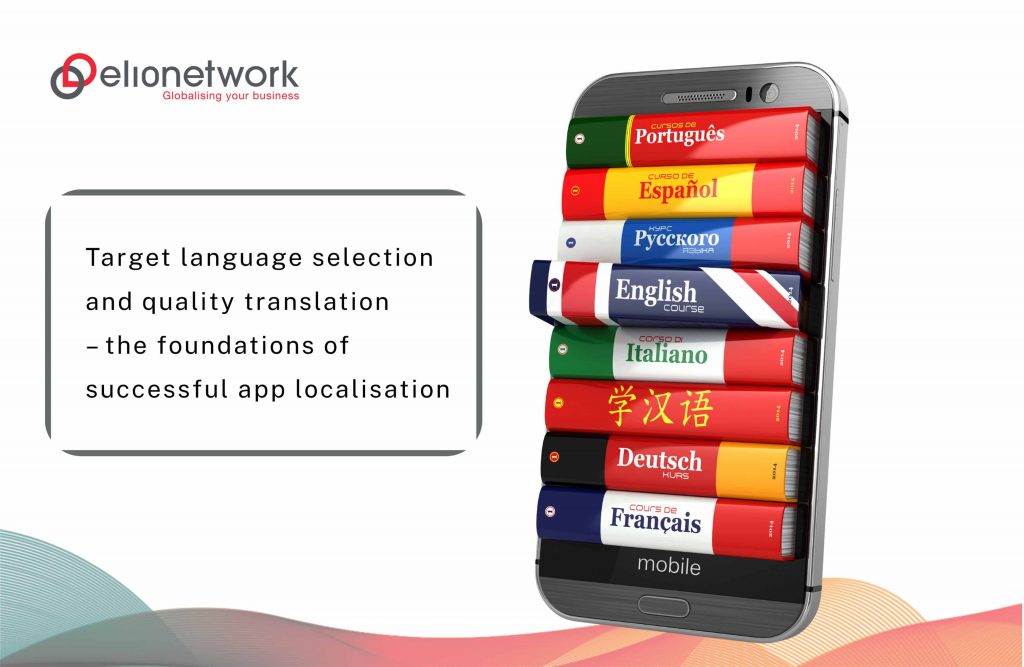
Target language selection and quality translation – the foundations of successful app localisation
Text content plays a central role in mobile app localisation. By the time developers contact a software localisation provider, they usually have already selected one or more target languages based on their global business strategy. Choosing widely spoken languages like Arabic, Spanish, or Chinese helps apps reach large user bases quickly. However, some apps perform better in niche markets, making translations into smaller languages a smart strategic move.
A quality language service provider can manage multilingual app localisation, enabling simultaneous localisation into multiple languages. This approach saves time and ensures consistent delivery of multimedia content across markets.
The devil is in the detail
– Localising multimedia content, including video games, clips, and more, requires expertise across multiple fields. Developers must find tailored solutions for each case. Although complex, this process often multiplies ROI for IT teams (click here for more details).
– Text length poses a major challenge in software localisation. Most software text must fit into tight spaces, especially in mobile app interfaces. Each language demands unique solutions. For Roman-script languages, reducing font size may work, but this approach can harm readability in languages like Japanese. Languages with minimal spacing, such as Thai, often require alternative design strategies. Intensive software testing helps identify these issues, which multilingual DTP or IT specialists can then resolve.
– Developers should verify font display and visual appeal, especially for languages prone to rendering issues, such as Burmese or Vietnamese.
– During mobile app localisation, technical challenges often arise. Solving them requires close collaboration between IT experts and linguists to ensure smooth integration.
– Many apps include custom glossaries with app-specific terms. To maintain consistency, IT developers should coordinate with the software localisation provider, who can share the glossary with linguists throughout the translation process.

Localising more than just the app
It is interesting to note that in the mobile app localisation process, a lot of translation work is required for text that is not part of the actual software. Depending on the type of the mobile app (game, education, shopping, transport services, staff training, etc.), translations are usually also required forthe following:
– Marketing collateral (for which transcreation will often be a preferable option)
– Legal conditions for app usage
– Contracts with business partners in foreign markets
– App user feedback forms / questionnaires
– Websites of the IT developers, etc.
elionetwork has proven to be an expert software localisation service provider for mobile app developers and other companies from the IT sector. With our rich pool of professional translators, designers, IT engineers, etc. we can handle the entire software localisation process and provide turnkey solutions for our clients. If you are looking for app localisation solutions, contact our friendly team now to see how we can help you!