

 Translation
 Transcreation
 DTP
DTP Multimedia
 Interpretation
 Copywriting
 Design
 Filming
 Technical Writing
 Digital Marketing
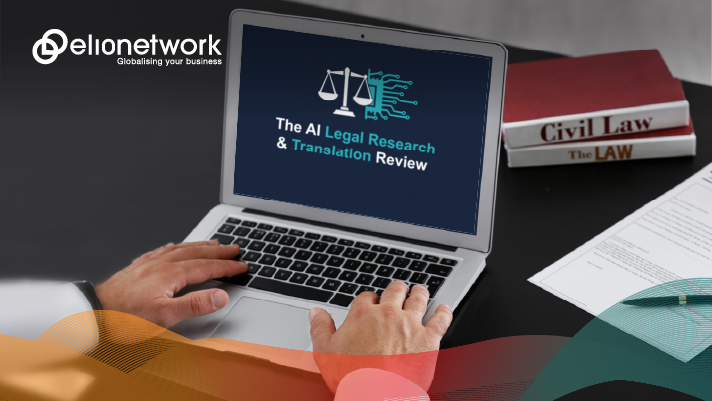
AI is no longer a distant idea in the legal industry. It is already being used to summarise documents, search large volumes of information, draft first versions of clauses, compare contracts, and support multilingual workflows.
For legal teams, this can be useful. Legal work often involves long documents, tight deadlines, and repeated checks across contracts, policies, filings, due diligence materials, and compliance records. AI can help speed up some early-stage tasks. However, when it comes to legal translation, one point remains clear: AI should assist the process, not become the final reviewer.
Legal translation is not only about changing words from one language to another. It is about preserving legal meaning, intent, tone, jurisdictional context, and confidentiality. A small mistranslation can change how a clause is interpreted. An unclear term can create confusion between parties. A misplaced phrase can affect compliance, negotiations, or even court proceedings.

AI Can Help, But It Can Also Get Things Wrong
One of the most well-known examples of AI risk in legal work is the Mata v. Avianca case in the United States. In 2023, two lawyers were sanctioned after submitting a legal brief that included fake case citations generated by ChatGPT. The issue was not simply that AI produced inaccurate information. The bigger problem was that the output was not properly checked before it was used in a legal setting.
This example is a useful reminder for legal translation too. AI-generated text can sound confident and polished, even when it is inaccurate. In legal documents, that confidence can be dangerous. A translated clause may look smooth, but still miss the legal nuance. A term may appear correct, but may not match the accepted wording in a specific jurisdiction. A summary may feel helpful, but may leave out an important condition, exception, or obligation.
This is why human review is not just a final polish. It is a quality control step that protects meaning.
Legal Language Requires Context, Not Just Fluency
Legal translators do more than understand two languages. They also need to understand how legal concepts work across markets. For example, a term used in a Singapore contract may not have a perfect equivalent in Vietnamese, Thai, Japanese, or Bahasa Indonesia. In some cases, the translator may need to choose between a literal translation, a functional equivalent, or an explanatory phrase.
AI may suggest a fast answer, but it may not always recognise when legal systems differ. It may also struggle with defined terms, cross-references, older legal wording, or documents that combine several jurisdictions.
Research has also shown that legal AI tools are not risk-free. A 2024 study on leading AI legal research tools found that even specialised tools could still produce hallucinations. This does not mean AI has no place in legal work. It means legal teams should use it with clear limits, strong review processes, and qualified professionals who can verify the output.

Data Security Is Part of Translation Quality
In legal translation, quality is not only about accuracy. It also includes how documents are handled.
Contracts, employment records, litigation documents, acquisition files, intellectual property materials, board papers, and compliance reports often contain sensitive information. If these files are uploaded into public AI tools without proper controls, the risk is not just a bad translation. The risk may include confidentiality breaches, data exposure, and loss of client trust.
A broader corporate example came from Samsung in 2023, when employees reportedly entered sensitive company information into ChatGPT, including source code and meeting notes. Samsung later restricted employee use of generative AI tools. While this was not a legal translation case, it shows why organisations need clear rules around what can and cannot be placed into AI platforms.
For legal teams, the lesson is especially relevant. Before using AI in any multilingual legal workflow, teams should ask practical questions. Is the tool approved for confidential documents? Where is the data stored? Can inputs be used for training? Who can access the files? Is there a human reviewer with legal-language experience? Are terminology and formatting rules controlled?
If these questions are not answered clearly, AI may create more risk than efficiency.
What a Safer Legal Translation Workflow Looks Like
A safer workflow does not need to reject AI completely. Instead, it should define where AI is useful and where human expertise is required.
AI may support early-stage tasks such as extracting key terms, comparing document versions, preparing draft summaries, or identifying repeated language. However, the translation of legally sensitive content should still involve qualified linguists, legal-language reviewers, terminology checks, and final human approval.
A strong workflow should also include secure file handling, clear confidentiality procedures, version control, glossary management, and reviewer accountability. These steps may sound operational, but they directly affect legal translation quality.
For example, if a company is translating a master service agreement into several APAC languages, consistency matters across every version. Defined terms, liability clauses, payment obligations, data protection language, and dispute resolution wording must be handled carefully. A fast draft may save time at the beginning, but an unchecked mistake may cost much more later.
The Human Layer Still Matters
AI is changing legal workflows, and it will continue to do so. Used carefully, it can help legal teams work faster and manage large volumes of content. But legal translation remains a high-trust task.
The final reviewer should be someone who understands language, legal context, document purpose, and risk. This human layer is what helps businesses avoid over-reliance on fluent but unverified output.
At elionetwork, we support organisations with legal translation and multilingual review across different markets. Our work can include contracts, corporate documents, compliance materials, policies, legal correspondence, and other sensitive business content. For teams working across APAC and beyond, the goal is not only to translate accurately, but to help legal communication remain clear, consistent, and carefully handled.
AI can be a useful assistant. But in legal translation, trust still depends on human judgement. For businesses handling legal documents across languages and markets, working with the right translation partner can help reduce risk, protect confidentiality, and keep every version of your legal communication clear and reliable.