
 Translation
 Transcreation
 DTP
 Multimedia
 Interpretation
 Copywriting
 Design
 Filming
 Technical Writing
 Digital Marketing
As AI translation becomes faster and more accessible, businesses face a new challenge: ensuring that multilingual content remains accurate, consistent and reliable.
Artificial intelligence has changed how businesses approach translation. What once required days of manual work can now be completed in minutes, allowing organisations to produce multilingual content at a much greater scale.
For businesses operating across Asia-Pacific (APAC), this creates new opportunities. Marketing teams can adapt campaigns more quickly, customer support teams can respond across languages, and companies can manage growing volumes of technical documentation.
However, faster translation does not always mean better communication.
An AI-generated translation may sound natural while containing subtle errors in terminology, meaning or cultural context. These mistakes can be difficult to identify, particularly when the translated text appears fluent and professional.
As businesses increasingly adopt AI-powered translation, maintaining quality becomes a growing priority. This is where AI translation quality assurance plays an important role.
The question is shifting from “Can AI translate this?” to “How do we know the translation is reliable?”

1. AI Translation Has Improved, but Accuracy Remains a Challenge
Modern AI translation tools can process large volumes of text, recognise context and generate increasingly natural language. Large language models (LLMs) have also made translation more flexible, especially for content requiring a conversational tone.
Yet even advanced systems can make mistakes.
For example, an AI model might translate a technical term differently across multiple documents. It may misunderstand an ambiguous sentence or produce wording that sounds appropriate but changes the original meaning.
These issues become more significant when businesses operate across multiple languages and markets.
Consider a pharmaceutical company preparing product documentation for Singapore, Thailand and Vietnam. An inconsistent medical term could create confusion, even if the surrounding translation appears grammatically correct.
Similarly, a financial services company may need precise terminology when communicating contractual obligations or payment conditions.
In these situations, translation accuracy depends on more than linguistic fluency. It also requires subject knowledge, terminology consistency and an understanding of how the content will be used.
2. A New Trend: Using AI to Evaluate AI Translation
One of the emerging innovations in 2026 is the use of artificial intelligence to assess translations generated by other AI systems.
Rather than relying entirely on manual checks, businesses can use automated quality evaluation to identify potential problems before publication.
For example, in 2026, Smartling introduced its LQA Agent, designed to assess translation quality using the Multidimensional Quality Metrics (MQM) framework.
MQM provides a structured approach to identifying translation errors, including problems involving accuracy, terminology, fluency and style.
This development highlights how AI translation quality assurance is evolving. AI is becoming part of both translation production and translation quality control.
An increasingly common workflow may look like this:
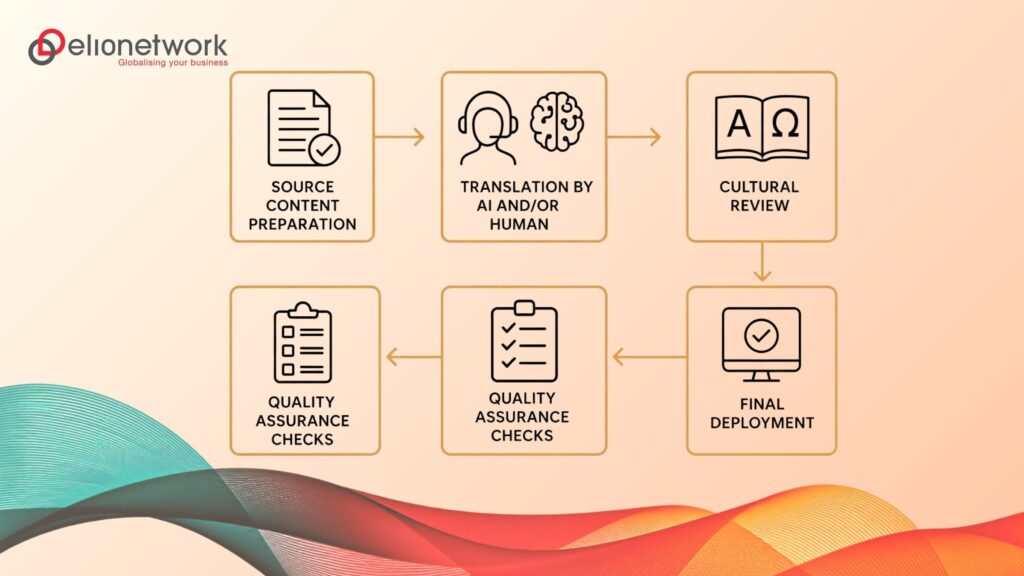
This approach can help localisation teams prioritise their efforts. Instead of reviewing every translation with the same level of attention, they can focus on content requiring specialist judgement.
However, automated quality checks are not perfect. AI evaluation systems can overlook errors or incorrectly flag acceptable translations.
Therefore, automated evaluation should support quality assurance rather than serve as the only measure of translation accuracy.
3. Not Every Translation Error Carries the Same Risk
A minor wording issue in a social media caption may have limited consequences. The same type of error in a legal agreement or medical document could create much greater problems.
This difference is encouraging businesses to adopt risk-based AI translation quality assurance.
Under this approach, the level of review depends on the content’s purpose, complexity and potential consequences.
For example:
| Content type | Quality considerations |
| Marketing and social media | Brand voice, cultural relevance, clarity |
| E-commerce content | Product accuracy, payment instructions, customer understanding |
| Technical documentation | Terminology, instructions, technical accuracy |
| Legal documents | Legal meaning, jurisdiction-specific terminology |
| Medical and pharmaceutical content | Patient safety, regulatory accuracy, specialist terminology |
For lower-risk content, AI-powered translation combined with automated checks may be appropriate, depending on the organisation’s quality requirements.
However, high-risk materials generally require qualified human linguists and, where necessary, subject-matter specialists.
The goal is not to eliminate human involvement. It is to apply human expertise where it contributes the greatest value.
4. Why Human Expertise Still Matters in AI Translation
AI can identify patterns, compare terminology and process content at impressive speeds. However, understanding language also involves interpreting intention, cultural expectations and industry-specific meaning.
These considerations are especially important across APAC, where languages and communication styles vary considerably. A marketing message that sounds persuasive in English may appear overly direct when translated into another language. Similarly, a technically accurate phrase may not reflect the terminology commonly used by local professionals.
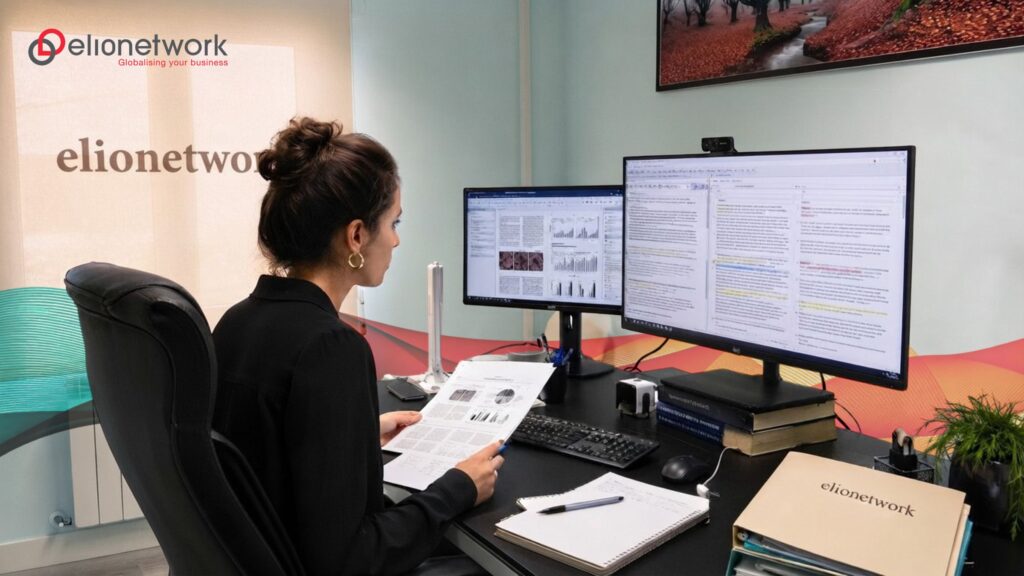
Human reviewers can assess these differences and determine whether a translation communicates the intended message effectively. They also help maintain consistency across campaigns, documents and communication channels. For international businesses, this is particularly valuable when several teams produce multilingual content using different AI tools. Without clear terminology guidelines and quality standards, translations may become inconsistent even when each individual output appears acceptable. Combining human expertise with AI-powered translation helps businesses balance efficiency with contextual understanding. Human reviewers also strengthen translation accuracy by identifying subtle issues that automated systems may miss.
5. Building a More Reliable AI Translation Quality Assurance Workflow
For businesses incorporating AI into their multilingual operations, quality assurance should begin before translation takes place.
Clear processes can reduce errors, improve consistency and make multilingual content easier to manage.
Several practices are worth considering.
Establish approved terminology. Create multilingual glossaries covering product names, technical terms and industry-specific expressions. These resources help both AI systems and human reviewers maintain consistency.
Define quality standards. Set clear expectations for accuracy, tone, formatting and cultural relevance. Different content types may require different levels of review.
Use automated checks appropriately. AI-powered quality evaluation can help identify potential errors, but its findings should be interpreted carefully.
Introduce human review based on risk. Prioritise specialist review for sensitive, complex or customer-facing materials where mistakes could have significant consequences.
Monitor translation performance. Review recurring errors and feedback to improve terminology resources, translation instructions and quality processes over time.
Together, these practices support a more structured approach to AI translation quality assurance, helping organisations maintain reliable multilingual communication as content volumes grow.
6. What AI Translation Quality Assurance Means for Businesses Expanding Across APAC
For companies entering new markets, multilingual communication often extends across websites, marketing campaigns, product information, technical documentation and customer support. AI translation can help manage this growing volume of content. However, businesses must also ensure that their communication remains appropriate for each market. This is particularly relevant in Southeast Asia, where linguistic diversity, local terminology and cultural expectations can influence how audiences interpret information.
A single AI translation workflow may not deliver the same quality across every language pair or industry. Therefore, organisations should consider not only which AI tools they use, but also how translations are evaluated, reviewed and maintained. For businesses managing multilingual content across several markets, AI translation quality assurance is becoming just as important as translation speed.
7. Conclusion: The Future of AI Translation Is About Trust
AI translation will continue to evolve, bringing greater speed, scalability and accessibility to multilingual communication. Yet as businesses rely more heavily on AI-generated content, the importance of quality control will only grow. The next stage of innovation is not simply about producing more translations. It is about establishing reliable processes to evaluate accuracy, manage risks and maintain consistency across languages. AI-powered quality evaluation is an important development, but it works best alongside clear standards and appropriate human oversight.
At elionetwork, we support businesses with professional translation, localisation, terminology management and multilingual quality assurance across APAC and beyond. Our experienced linguists help organisations maintain accurate, culturally appropriate communication across industries and markets. As AI-powered translation becomes more integrated into localisation workflows, combining technology with linguistic expertise can help businesses communicate with greater confidence.
Looking to improve the quality and consistency of your multilingual content? Explore elionetwork’s localisation services.