


 Translation
 Transcreation
 DTP
DTP Multimedia
 Interpretation
 Copywriting
 Design
 Filming
 Technical Writing
 Digital Marketing
Localisation service providers help software developers expand their business globally. Software localisation makes software understandable and usable for customers in foreign markets so that they might be interested in purchasing it. However, software translation and localisation is difficult and in this blog we would like to provide a couple of tips that will help make the process easier. You will see that it is definitely a good idea to learn more about app and software localisation!
Consider localisation from the very beginning of software development
Many IT developers believe they can translate any English software into other languages at a later stage. Technically, that’s not wrong, but ignoring software localisation and linguistic diversity from the start leads to significant extra effort down the line.
One common issue arises when English-speaking programmers define the beginning, content, and end of text strings, and determine how those strings will be re-combined. We’ll explore this topic further in a later post. For now, just keep in mind: while splitting and recombining strings may work in English, this approach often fails in other languages.
By considering software localisation early in development, programmers can avoid many of these problems.
Allow enough time
It’s understandable that every IT developer wants swift software localisation. However, many underestimate the time required for high-quality translation—as discussed in our blog “Common Misconceptions About Translation (Part I)”, and this applies equally to software projects. Good news is that a quality localisation service company will have several ways at hand to save time without putting quality at risk, for example by streamlining processes internally and using CAT tools.
Provide a glossary and a style guide for the software localisation service agency
A glossary greatly supports linguists working on software localisation. It helps them understand key software concepts, apply accurate terminology, and identify terms that should remain untranslated, such as product names or specific features.
A style guide also plays a crucial role in maintaining high-quality output. Why? Because every IT company wants to project a unique identity, and a style guide helps linguists strike the right tone to reflect that. For example, languages like French or German use varying levels of politeness, which appear in greetings, phrases, and even personal pronouns.
If a software targets reputable financial institutions or banks, using formal language and respectful pronouns makes sense. In contrast, when a developer aims to build a friendly, community-driven vibe — common among young startups, linguists briefed on this goal can choose informal phrasing and pronouns to match the tone.
By preparing glossaries and style guides early, companies ensure smoother, more effective software localisation.
Provide sufficient extra information for linguists, consider linguistic diversity and stay available for questions
It will be incredibly helpful for linguists to have supplementary information at hand. Any translator, who has ever received source files for software translations with a few hundred unrelated strings without any context, will confirm that without explanations and context, translating the content correctly will be practically impossible. Ideally each and every string should have explanations or contain a link from which it is visible in which context the translations will appear. Also note that because every language has a different nature, and as already mentioned earlier, many strings simply cannot be translated properly. Very often it is simply not possible to translate an English string 1:1 into foreign languages. Let’s illustrate this with a few examples. Imagine that a booking software needs to be translated from English into German. Typically problems will include:
Sentence structure:
Once users enter their data and the system begins searching for flights, the English interface might display “Searching cheap flights to Singapore.” In this case, one text string (“A”) could be defined as “Searching for cheap flights to,” while another string (“B”) might be “Singapore.” Developers often swap string B with other country names, such as “Turkey,” to create variations like “Searching for cheap flights to Turkey.”
Now imagine a German translator working with these strings. The first challenge appears when translating string A, which results in an awkward phrase like “Es werden billige Flüge gesucht nach.” German reads more naturally when string A wraps around string B. So, while English uses the structure A + B, German prefers splitting string A into two parts and rearranging it as A1 + B + A2.
This example highlights a key consideration in software localisation: languages differ in structure, and direct string reuse across languages often leads to unnatural results. Planning for linguistic flexibility from the start helps ensure smoother localisation and better user experience.
Grammar:
Now, let’s say you are looking for a flight to Turkey and need to see that in German translation. Whilst in English it makes perfect sense to say “Searching cheap flights to Turkey”, if you recombine the strings in German, it will become “… nach Türkei” – which is grammatically totally incorrect. A quality German translation would need to show the grammatically correct forms for each and every destination (for example “nach Singapur”, “in die Türkei”, “auf die Malediven”, “in den Iran”, etc.). However, when all translations are supposed to be based on the English “flights to XY”, creating a grammatically correct translationfor each context will simply not be possible. As you can see, it will be necessary to change the strings.
Adaptions based on context:
Now, let’s say the English software uses the verb “confirm” in different contexts, such as a) a single word on a button (to confirm that the user has read the conditions of carriage, selected a special meal, or chosen a seat), and b) as an imperative request (e.g., “Confirm your booking”, “Confirm your passport details”, “Confirm your seat selection”). Many programmers reuse the translation from option a) for the cases in b), but this approach often fails. In German, for instance, different forms apply: “Bestätigen” vs. “Bestätigen Sie”.
Is that a German thing? Absolutely not! Every language follows grammar rules that prevent accurate results when translating strings 1:1. For example, Asian languages like Chinese, Japanese, Thai, and Vietnamese use classifiers when counting nouns. Italian and French assign genders to nouns. Some languages use plural forms, others don’t. Articles vary widely across languages. These challenges make software localisation complex and nuanced.
Translate absolutely all documents that have to do with your software
Software does not come without legal disclaimers, license contracts, usage manuals, marketing collateral, etc. and it is crucial to translate all of them. One example: Users might be interested in using (and paying for) a software license, but will most probably not sign a license contract in a foreign language that they cannot understand. Remember that providing all sorts of relevant texts, such as FAQ’s, PR material, etc. in local languages is also a way to win your foreign clients’ trust and show them that you actually really care for them!
Arrange intensive testing and provide multilingual feedback forms
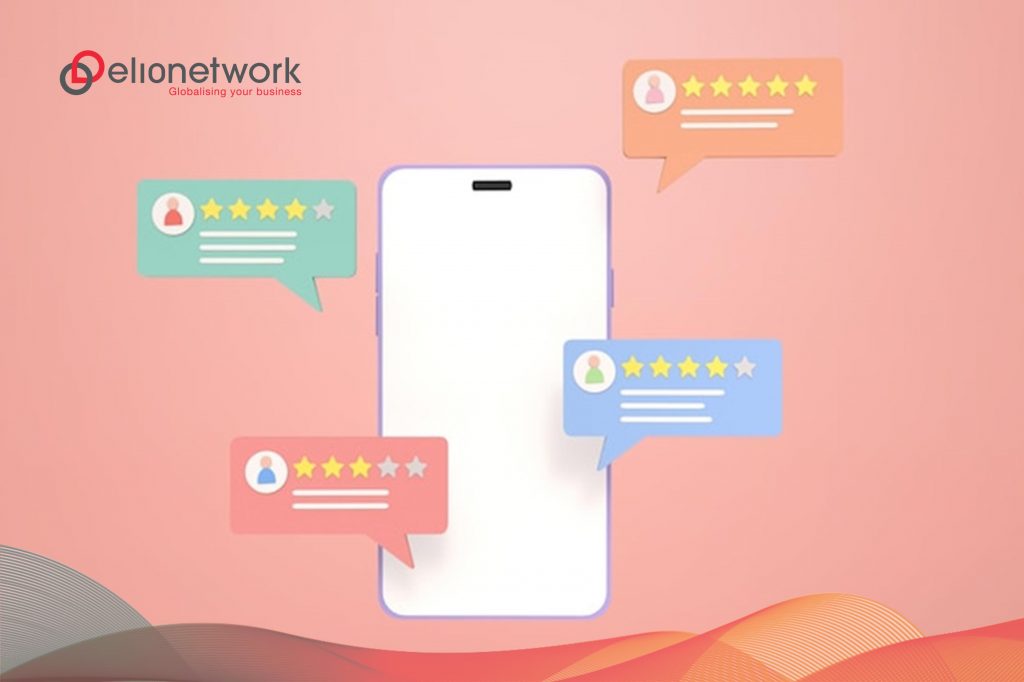
Intensive testing is an integral part of the software localisation process and a combination of automated and manual testing has become a standard procedure for most software products, including video games, e-learning software, company staff training programs, mobile apps, etc. In the testing phase, many issues can usually be discovered and resolved, of course. However, remember that it is likely that some issues will remain and that later real software users will detect them. As you will certainly want to take their feedback into account so that you can fix any remaining errors in updates, remember to provide survey/feedback forms in local languages!
Find a one-stop service provider
Experience shows that IT developers achieve the best results when they entrust the complete software localisation process to a single service provider. For example, if one company handles translation and another handles testing, any errors discovered during testing require going back to the original translator, followed by a second round of testing and additional costs. Managing everything in one place – software translation, manual translation, transcreation for marketing collateral, license agreement translation, testing, multilingual DTP, and more, saves significant time, effort, and money.
Centralising the process also ensures consistency and accurate terminology across the software and all related content. Splitting tasks among multiple providers, such as assigning software translation to one company and manuals to another — often leads to inconsistencies, confusion, and user misunderstandings.
When choosing a translation service provider, make sure they can handle complex multimedia software localisation to maintain quality and coherence throughout your product.
elionetwork has completed countless app and software localisation projects over the past 20 years. We can proudly claim that we are a true one-stop service provider with a large in-house team as well as an external pool that includes highly skilled linguists, designers, IT engineers, testers, reviewers, etc. Clients from the IT sector who approach us with their software localisation service needs will receive turnkey solutions. As part of our business philosophy, customers will have one single point of contact throughout the localisation process, which minimises time, trouble and costs. If you are looking for software localisation solutions, please contact us nowto find out what we can do for you!